Pedestrian Accident Lawyer
Last Updated: February 2026
Key Takeaways
The NHTSA reports that over 7,500 pedestrians are killed in traffic crashes annually in the United States, making pedestrian fatalities roughly 17% of all traffic deaths. Driver negligence — including distraction, failure to yield, and impaired driving — causes the vast majority of these crashes. Injured pedestrians can recover compensation for medical expenses, lost wages, and pain and suffering, and may still have a claim even if they were partially at fault under comparative negligence rules in most states.
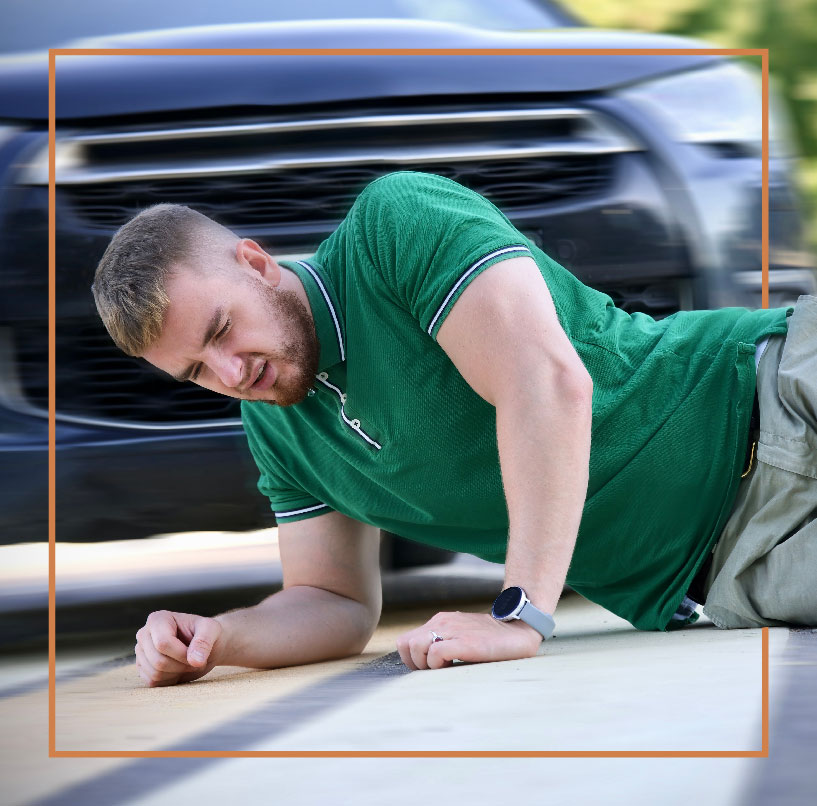
Pedestrians are among the most vulnerable road users. When a vehicle strikes a pedestrian, the results are often catastrophic because the pedestrian has no protection against the force of impact. If you or a loved one has been injured in a pedestrian accident caused by a negligent driver, you may be entitled to compensation for your medical expenses, lost income, pain and suffering, and other losses. At Maxx Compensation, attorney Charles C. Teale and our legal team have extensive experience representing pedestrian accident victims and fighting for the compensation they deserve.
Call 877-462-9952 today for a free case evaluation.
Why Pedestrian Accidents Are Uniquely Devastating
Pedestrian accidents produce some of the most severe injuries of any traffic collision. A typical passenger vehicle weighs approximately 4,000 pounds and even an SUV or pickup truck can weigh over 5,000 pounds. When this mass strikes an unprotected human body at any speed, the consequences are devastating. Unlike vehicle occupants who benefit from steel frames, crumple zones, airbags, and seatbelts, pedestrians absorb the full force of the impact with nothing to protect them.
The physics of pedestrian collisions make the injuries especially severe. When a vehicle strikes a pedestrian, the pedestrian’s lower body is typically hit first, causing leg and pelvis fractures. The pedestrian’s upper body then rotates onto the hood and may strike the windshield, causing head and torso injuries. Finally, the pedestrian may be thrown from the vehicle onto the pavement, causing additional impact injuries. This sequence of multiple impacts means that pedestrians frequently suffer injuries to nearly every part of their body in a single collision.
The growing size and weight of vehicles on American roads has made pedestrian accidents even more dangerous. The shift toward larger SUVs and pickup trucks with higher front-end profiles means that pedestrians are now more likely to be struck in the torso and head rather than the legs, significantly increasing the fatality rate. Understanding your legal rights after a pedestrian accident is critical to ensuring you receive the compensation needed for what is typically a long and difficult recovery.
What Are the Most Common Causes What Are the Most What Are the Most of Pedestrian Accidents???
Most pedestrian accidents are caused by driver negligence. According to the National Highway Traffic Safety Administration (NHTSA), over 7,500 pedestrians were killed in traffic crashes in the most recent reporting year, accounting for approximately 17% of all traffic fatalities. Drivers have a legal obligation to watch for pedestrians, yield at crosswalks, and exercise reasonable care to avoid striking people on or near the roadway.
Distracted Driving
Distracted driving is one of the fastest-growing causes of pedestrian accidents. Drivers who are texting, browsing their phones, talking on handheld devices, adjusting the GPS, eating, or engaging with passengers take their eyes and attention off the road. Even a few seconds of inattention at urban speeds covers enough distance to miss seeing a pedestrian stepping into a crosswalk. Because pedestrians present a smaller visual profile than other vehicles, they are disproportionately affected by driver distraction. Cell phone records obtained during litigation can prove that a driver was using their device at the time of the crash.
Failure to Yield at Crosswalks
Drivers are required to yield to pedestrians at marked crosswalks in every state. In many jurisdictions, drivers must also yield at unmarked crosswalks, which exist at most intersections even without painted lines. Despite these clear legal requirements, failure to yield at crosswalks remains one of the most frequent causes of pedestrian crashes. Drivers turning right on red, making left turns through intersections, or simply not paying attention to crosswalk signals strike pedestrians who have the legal right of way.
Speeding
Vehicle speed is the single most important factor determining whether a pedestrian survives a collision and how severe their injuries will be. Research by the AAA Foundation for Traffic Safety demonstrates that a pedestrian struck at 20 miles per hour has approximately a 5% risk of fatal injury. At 30 mph, that risk climbs to approximately 17%. At 40 mph, it reaches approximately 46%. And at 50 mph, the risk of fatal injury exceeds 70%. Speed also reduces a driver’s ability to see and react to pedestrians. A speeding driver has less time to brake and covers more distance before stopping, making pedestrian collisions both more likely and more severe.
Drunk and Impaired Driving
Alcohol and drugs impair a driver’s vision, judgment, reaction time, and coordination. Impaired drivers are significantly less likely to notice pedestrians and more likely to run red lights, fail to yield at crosswalks, and drive at excessive speeds. Driving under the influence is not only a criminal offense but also constitutes negligence per se in a civil injury claim, automatically establishing that the driver was negligent.
Turning Without Checking for Pedestrians
Drivers making left or right turns at intersections frequently focus on oncoming vehicle traffic and fail to look for pedestrians in the crosswalk. Left-turning drivers are particularly dangerous because they are often focused on finding a gap in oncoming traffic and accelerate through the turn without checking the crosswalk ahead. Right-turning drivers may similarly fail to check the crosswalk to their right before turning. These turning-vehicle collisions account for a significant portion of pedestrian injuries at intersections.
Running Red Lights and Stop Signs
Drivers who disregard traffic signals put pedestrians who have the walk signal or the right of way at stop-sign-controlled intersections in extreme danger. Red-light runners are often traveling at full speed when they enter the intersection, giving pedestrians no time to react and causing some of the most violent pedestrian collisions.
Backing Up Without Looking
Parking lot accidents frequently involve drivers backing out of parking spaces without adequately checking for pedestrians walking behind their vehicle. Despite rear-view cameras now being standard equipment on all new vehicles, back-over accidents remain a persistent problem, particularly involving children and elderly pedestrians who may move slowly through parking areas.
Poor Visibility Conditions
Nighttime, dawn, dusk, rain, fog, and other low-visibility conditions dramatically increase the risk of pedestrian accidents. According to the NHTSA, approximately 75% of pedestrian fatalities occur during dark conditions. Drivers must adjust their speed and increase their vigilance when visibility is reduced. Failure to do so is negligence. Pedestrians struck at night may have additional claims if the road was inadequately lit, as the government entity responsible for road lighting may share liability.
Where Do Pedestrian Accidents Most Commonly Happen?
Crosswalks and Intersections
Even with traffic signals and marked crosswalks, intersections are among the most dangerous locations for pedestrians. The convergence of turning vehicles, through traffic, and pedestrians creates multiple conflict points. Intersections with high traffic volumes, complex signal phases, or inadequate pedestrian crossing times are especially hazardous. If a dangerous intersection design contributed to your accident, the municipality may share liability for failing to implement adequate safety measures.
Parking Lots
Parking lots are a common site for pedestrian accidents. Although vehicle speeds in parking lots are generally lower than on roadways, the injuries can still be serious. Drivers are often distracted by searching for parking spaces, and visibility is limited by other parked vehicles. Children are at particular risk in parking lots because their small stature makes them difficult for drivers to see, especially when backing up.
Residential Neighborhoods
Children playing near streets, joggers, dog walkers, and pedestrians walking in residential areas are at risk from speeding or inattentive drivers. Residential streets may lack sidewalks, forcing pedestrians to walk in or along the roadway. Drivers who speed through residential areas or fail to watch for pedestrians bear responsibility for any resulting collisions.
School Zones
Despite reduced speed limits and crossing guards, pedestrian accidents near schools remain a serious concern. Children ages 5 to 9 are among the most vulnerable age groups for pedestrian injuries, according to the CDC. Drivers who speed through school zones, fail to stop for crossing guards, or ignore school zone signals face heightened liability because they are expected to exercise extraordinary caution in areas where children are present.
Highway Shoulders and Multi-Lane Roads
Pedestrians walking along or attempting to cross multi-lane roads and highway shoulders face extreme danger from high-speed traffic. These roads are often designed exclusively for vehicle traffic, with no sidewalks, crosswalks, or pedestrian signals. Pedestrians who must use these roads due to a lack of alternatives, such as disabled motorists or pedestrians in rural areas without sidewalks, are still owed a duty of care by drivers.
Construction Zones
Altered pedestrian pathways, closed sidewalks, confusing signage, and blocked crosswalks in construction zones can channel pedestrians into dangerous situations near vehicle traffic. Both the construction company and the government entity that approved the traffic control plan may be liable if a pedestrian is injured due to an inadequate pedestrian detour.
What Injuries Do Pedestrian Accidents Cause?
Because pedestrians have no protective barrier between themselves and a vehicle, pedestrian accidents tend to cause severe, often life-threatening injuries:
- Traumatic brain injuries — The impact can cause the pedestrian’s head to strike the vehicle hood, windshield, or pavement, resulting in concussions, brain contusions, or severe traumatic brain injuries that cause permanent cognitive, behavioral, and physical impairment
- Spinal cord injuries — The force of impact can damage the spinal cord, potentially causing partial or complete paralysis. Spinal cord injuries require lifelong medical care and dramatically alter every aspect of the victim’s life
- Neck and back injuries — Herniated discs, vertebral fractures, and soft tissue injuries that can cause chronic pain and limited mobility
- Broken bones — Leg fractures, hip fractures, pelvic fractures, arm fractures, and rib fractures are among the most frequent pedestrian accident injuries. The initial impact with the vehicle typically causes lower extremity fractures, while the secondary impact with the ground causes upper body fractures
- Internal organ damage — The blunt force trauma of a vehicle impact can cause internal bleeding, organ lacerations, ruptured spleens, and other life-threatening internal injuries that may not be immediately apparent
- Knee and lower extremity injuries — Because the vehicle’s bumper typically strikes the pedestrian at knee height, torn ligaments, shattered kneecaps, and tibial plateau fractures are extremely common
- Road rash and burns — Being dragged along pavement or coming into contact with hot vehicle components can cause severe skin injuries requiring grafts
- Amputations — Severe crush injuries from a vehicle impact may require surgical amputation of limbs
- Facial and dental injuries — Broken jaws, lost teeth, orbital fractures, and facial lacerations requiring reconstructive surgery
- Psychological injuries — Post-traumatic stress disorder (PTSD), anxiety, depression, and a lasting fear of crossing streets or walking near traffic
- Fatal injuries — Pedestrian accidents have a high fatality rate. The NHTSA reports pedestrians are 1.5 times more likely per trip to be killed in a crash than vehicle occupants
How Do You Prove Fault in a Pedestrian Accident?
To recover compensation, you must prove that the driver was negligent. This requires establishing four elements: the driver had a duty to exercise reasonable care, the driver breached that duty through negligent behavior, the driver’s negligence caused the accident, and you suffered injuries and damages as a result.
Evidence that can help establish fault includes:
- Police accident reports — The responding officer may document the driver’s traffic violations, witness statements, and the officer’s determination of fault
- Surveillance camera footage — Video from nearby businesses, traffic cameras, doorbell cameras, and dashcams can provide definitive evidence of how the accident occurred
- Eyewitness testimony — People who saw the accident can corroborate your account of the driver’s behavior
- Cell phone records — Your attorney can subpoena the driver’s phone records to prove they were texting or using their phone at the time of the crash
- Vehicle damage patterns — The location and type of damage to the vehicle, including dents on the hood and damage to the windshield, can help experts determine the speed of impact and the sequence of events
- Skid marks or absence of skid marks — The presence of skid marks indicates the driver attempted to brake, while the absence of skid marks may indicate that the driver never saw the pedestrian or was unable to react due to distraction or impairment
- Accident reconstruction experts — Specialists who analyze physical evidence to determine vehicle speed, pedestrian position, and the sequence of events leading to the collision
- Traffic signal timing records — Records from the traffic signal controller can establish whether the pedestrian had a walk signal or the driver ran a red light
How Does Comparative Fault Affect Your Case How Does Affect Your Case in Pedestrian Cases??
Insurance companies frequently argue that the pedestrian was partially at fault for the accident. Common arguments include that the pedestrian was jaywalking, crossing against a signal, walking while distracted by a phone, wearing dark clothing at night, or was intoxicated. In states with comparative fault rules, your compensation may be reduced by your percentage of responsibility.
However, it is critical to understand that even if a pedestrian was partially at fault, the driver still had a duty to exercise reasonable care to avoid striking them. A driver who was speeding, texting, or driving impaired cannot escape liability simply because the pedestrian was jaywalking. In most states, you can still recover substantial compensation even when you share some responsibility for the accident.
It is equally important to understand that many situations insurance companies characterize as pedestrian negligence are not actually negligent. For example, crossing at an unmarked crosswalk is legal in most jurisdictions. Walking on the roadway where no sidewalk exists is permitted. Being present on the road does not constitute negligence. An experienced pedestrian accident attorney can counter these arguments and protect your right to fair compensation.
Pedestrian Accidents Involving Children
Children are among the most vulnerable pedestrian populations. Children ages 5 to 14 have among the highest rates of pedestrian injuries, according to the CDC. Children face elevated risks because they are smaller and harder for drivers to see, they may dart into the street unexpectedly, they have difficulty judging vehicle speeds and distances, and they may not fully understand traffic rules and signals.
The law recognizes this vulnerability by holding children to a different standard of care than adults. Young children are generally not expected to exercise the same level of judgment and caution as adult pedestrians. Conversely, drivers in areas where children are likely to be present, including near schools, parks, playgrounds, residential neighborhoods, and ice cream trucks, are expected to exercise heightened caution and reduce their speed.
If your child has been injured in a pedestrian accident, a claim can be filed on their behalf by a parent or legal guardian. Any settlement on behalf of a minor must be approved by a court to ensure it adequately protects the child’s interests. For children who suffer severe injuries, a structured settlement or trust may be established to ensure the funds are available for their long-term medical care and needs.
Hit-and-Run Pedestrian Accidents
Hit-and-run accidents are tragically common in pedestrian crashes. When a driver strikes a pedestrian and flees the scene, the injured pedestrian is left without immediate assistance and without the driver’s identity and insurance information. Hit-and-run crashes account for a disproportionate share of pedestrian fatalities.
If you are the victim of a pedestrian hit-and-run, take these steps:
- Call 911 immediately to report the accident and request medical assistance
- Try to note any details about the vehicle, including its color, make, model, and any portion of the license plate number
- Ask bystanders if anyone witnessed the accident or saw the vehicle
- Look for surveillance cameras on nearby buildings or traffic cameras at the intersection
- Contact an attorney who can work with police and private investigators to identify the driver
Even if the driver is never identified, you may still have options for compensation. Your own uninsured motorist coverage may cover your injuries in a hit-and-run. Some states have crime victim compensation funds that provide benefits to victims of hit-and-run accidents. An attorney can review all available coverage and identify every potential source of compensation.
What Compensation Is Available for Pedestrian Accident Victims?
If a negligent driver caused your pedestrian accident, you may be entitled to recover:
Economic Damages
- Medical expenses — Emergency treatment, hospitalization, surgery, rehabilitation, physical therapy, prescription medications, and all future medical care necessitated by your injuries. Pedestrian accident victims frequently require multiple surgeries, extended hospital stays, and months or years of rehabilitation
- Lost wages — Income lost during your recovery period, including salary, hourly wages, bonuses, commissions, and benefits
- Loss of earning capacity — If your injuries permanently affect your ability to work or force you into a lower-paying occupation
- Assistive devices and home modifications — Wheelchairs, prosthetics, walkers, home accessibility modifications such as ramps and grab bars, and modified vehicles
- In-home care and assistance — If your injuries require home health aides, visiting nurses, or help with daily activities
Non-Economic Damages
- Pain and suffering — Physical pain from your injuries and the ongoing discomfort of treatment, surgery, and rehabilitation
- Emotional distress — Anxiety, PTSD, depression, and fear of walking near roads or crossing streets that many pedestrian accident victims experience
- Loss of enjoyment of life — Inability to walk, exercise, travel, and participate in activities you enjoyed before the accident
- Permanent disability or disfigurement — Long-term physical limitations, scarring, amputation, or paralysis
- Loss of consortium — The impact of your injuries on your relationship with your spouse or partner
What Should You Do After a Pedestrian Accident?
- Call 911 — Report the accident and request an ambulance. A police report is critical evidence for your claim, and the driver may face criminal charges for leaving the scene if they attempt to flee.
- Seek immediate medical attention — Even if you can walk away from the scene, many serious injuries, including internal bleeding, traumatic brain injuries, and spinal injuries, are not immediately apparent. Adrenaline can mask pain for hours. Get examined by a doctor as soon as possible. Delaying treatment also gives the insurance company an argument that your injuries were not serious.
- Document the scene — If you are physically able, use your phone to photograph the accident scene, the vehicle, your injuries, the crosswalk or intersection, traffic signals, any visible skid marks, and the surrounding area.
- Get the driver’s information — Obtain the driver’s name, phone number, insurance information, driver’s license number, and license plate number.
- Collect witness information — Get names, phone numbers, and email addresses from anyone who saw the accident. Witness testimony is often decisive in pedestrian accident cases.
- Do not give statements to the driver’s insurance company — Insurance adjusters are trained to minimize your claim. They may ask leading questions designed to get you to admit fault or minimize your injuries. Speak with an attorney before giving any recorded statements.
- Preserve your clothing and personal items — The clothing and shoes you were wearing at the time of the accident, along with any personal items that were damaged, are physical evidence. Do not wash or discard them.
- Contact a pedestrian accident lawyer — An attorney can begin preserving critical evidence such as surveillance footage, which may be overwritten within days, and protect your right to full compensation.
Dealing with Insurance Companies After a Pedestrian Accident
The driver’s insurance company is not on your side. Their goal is to pay as little as possible for your claim, and their adjusters use proven tactics to reduce the value of pedestrian accident claims:
- Quick lowball settlement offers — Offering a small amount before you understand the full extent of your injuries, often within days of the accident when you may still be in the hospital
- Blaming the pedestrian — Arguing that you were jaywalking, crossing against the signal, wearing dark clothing, or distracted by your phone
- Requesting recorded statements — Asking you to describe the accident in a recorded statement that they can use to find inconsistencies
- Disputing the severity of injuries — Sending you to an independent medical examination with a doctor selected by the insurance company who will minimize your injuries
- Surveillance — Hiring private investigators to follow you and record video that they will claim shows you are less injured than you say
- Delaying the process — Dragging out the investigation and negotiation to pressure you into accepting less as your bills mount
An experienced pedestrian accident attorney can handle all communications with the insurance company, counter these tactics, and fight for the full value of your claim. At Maxx Compensation, we do not let insurance companies take advantage of injured pedestrians.
Frequently Asked Questions
Can I still recover compensation if I was jaywalking?
In many states, yes. Even if you were crossing outside of a crosswalk, the driver still had a duty to exercise reasonable care to avoid hitting you. Your compensation may be reduced by your percentage of fault under comparative fault rules, but you may still be entitled to a significant recovery. An attorney can evaluate the specific facts and laws applicable to your case.
What if the driver left the scene (hit-and-run)?
If the driver fled, report the accident to police immediately. Your own uninsured motorist coverage may cover your injuries. An attorney can also help identify the driver through surveillance footage, license plate databases, vehicle debris analysis, and other investigative methods. Even without identifying the driver, you may have compensation options available.
How much does a pedestrian accident lawyer cost?
At Maxx Compensation, we handle pedestrian accident cases on a contingency fee basis. You pay nothing upfront and we only collect a fee if we recover compensation for you. There are no consultation fees or out-of-pocket expenses.
What if a child was hit by a car?
Children are held to a different standard of care than adults. Young children are generally not expected to exercise the same judgment as adults when it comes to traffic safety. Drivers in areas where children are likely to be present, such as near schools, parks, and residential neighborhoods, are expected to exercise heightened caution. Claims on behalf of injured children must be filed by a parent or guardian and any settlement must be approved by the court to protect the child’s interests.
Can I sue the city if a dangerous road design caused the accident?
In some cases, a government entity may be partially liable if a dangerous road design, missing crosswalk, broken traffic signal, inadequate lighting, or absence of sidewalks contributed to the accident. Claims against government entities are subject to special rules, including shorter filing deadlines that may be as short as 30 to 180 days depending on the jurisdiction. Contact an attorney immediately to preserve your rights.
How long do I have to file a pedestrian accident claim?
The statute of limitations varies by state, typically ranging from one to four years from the date of the accident. Claims against government entities often have much shorter deadlines. The sooner you contact an attorney, the better your chances of preserving critical evidence and building a strong case.
What if the driver was uninsured?
If the driver who struck you did not carry auto insurance, your own uninsured motorist coverage may cover your injuries. An attorney can review all of your insurance policies, including auto, health, and any umbrella coverage, to identify every available source of compensation.
Can I recover compensation if I was hit in a parking lot?
Yes. Drivers in parking lots owe pedestrians the same duty of care as drivers on public roads. A driver who backs out of a parking space without checking for pedestrians, drives too fast through a parking lot, or fails to yield to pedestrians in crosswalks and walkways can be held liable for any resulting injuries.
What if distracted walking contributed to my accident?
While the defense may argue that you were distracted by your phone or headphones, the driver’s duty to watch for and avoid pedestrians remains paramount. Distracted walking may reduce your recovery under comparative fault rules, but it does not eliminate the driver’s liability. The driver’s negligence, not your phone use, caused the collision.
Do crosswalk laws protect pedestrians who cross at unmarked crosswalks?
In most states, yes. An unmarked crosswalk exists at every intersection where two roads meet, even without painted lines. Drivers are generally required to yield to pedestrians at these unmarked crosswalks just as they would at marked ones. However, the specific laws vary by state, so consult with an attorney about the crosswalk rules that apply in your jurisdiction.
Find a Pedestrian Accident Lawyer in Your State
Maxx Compensation represents pedestrian accident victims across all 50 states. Select your state to learn about the laws and legal options specific to your location:
- Alabama
- Alaska
- Arizona
- Arkansas
- California
- Colorado
- Connecticut
- Delaware
- Florida
- Georgia
- Hawaii
- Idaho
- Illinois
- Indiana
- Iowa
- Kansas
- Kentucky
- Louisiana
- Maine
- Maryland
- Massachusetts
- Michigan
- Minnesota
- Mississippi
- Missouri
- Montana
- Nebraska
- Nevada
- New Hampshire
- New Jersey
- New Mexico
- New York
- North Carolina
- North Dakota
- Ohio
- Oklahoma
- Oregon
- Pennsylvania
- Rhode Island
- South Carolina
- South Dakota
- Tennessee
- Texas
- Utah
- Vermont
- Virginia
- Washington
- West Virginia
- Wisconsin
- Wyoming
Contact Maxx Compensation Today
Pedestrian accident injuries are often life-changing, and victims deserve full compensation for the harm they have suffered. At Maxx Compensation, attorney Charles C. Teale and our legal team are ready to investigate your accident, identify all responsible parties, build a strong case with evidence including surveillance footage and accident reconstruction analysis, and fight for maximum compensation on your behalf.
Call 877-462-9952 today or visit our free case evaluation page for a free, confidential consultation. There is no fee unless we recover compensation for you.