Voted Best Personal Injury Attorney | Voted Top Trial Attorney
Slip and Fall Attorney
Slip and Fall Attorney
The insurance industry and commercial lobbying organizations often depict slip and fall accidents as the subject of slapstick comedy. The entertainment industry frequently shows a fall victim taking on and off a neck brace with the implication that the victim is faking a serious injury. Despite these stereotypes, slip and fall accidents result in far more significant consequences than a bruised ego.
According to the CDC, slip and fall accidents result in the hospitalization of 700,000 people each year. Further, slip and falls are the leading cause of death for people over the age of 65 and constitute the leading cause of traumatic brain injuries among all age groups. In other words, slip and fall accidents are both serious and common.
Holding Negligent Property Owners Accountable – Slip and Fall Lawyer
If you suffer a broken hip, fracture, traumatic brain injury, or other serious injury in a fall because of hazards on commercial, public, or residential property, you might be saddled with mounting medical expenses, lost wages, and even permanent disability or other forms of loss. As a seasoned and compassionate slip and fall firm, we have the experience and commitment to tenaciously pursue the financial recovery clients need to reclaim their lives after a serious injury. Because Maxx Compensation law firm handles many slip and fall cases, we are thoroughly versed in the tactics insurers use to avoid or minimize payouts in fall-related accident cases. Since a slip and fall accident often turns on subtle factual distinctions, we work with our legal staff to thoroughly gather evidence and investigate the facts. This process includes (but is not limited to) interviewing witnesses, obtaining medical records, uncovering past safety citations or violations, reviewing video footage, exposing deviations from maintenance policies, and analyzing the specific hazardous conditions that caused your fall.
Slip and Fall Accident Lawyers Highlight Common Causes of Falls
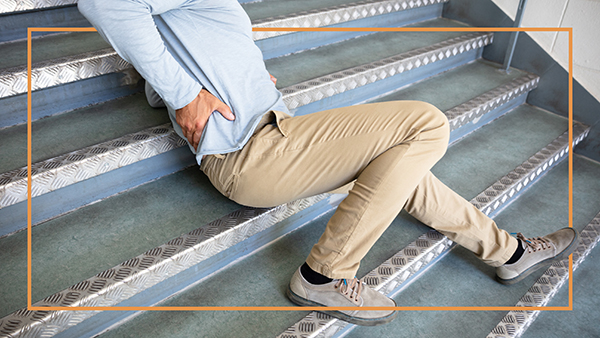
A slip or trip and fall accident may be caused by a wide range of potential hazards that include slipping on a wet or icy surface or stumbling down a staircase with a poorly maintained step.
Some common causes of slip and falls include:
Falls caused by debris or other items in walkways
Poorly maintained or missing railings
Unaddressed wet flooring or pavement because of spills or weather
Uneven, poorly maintained or cracked pavement, floors, or walkways
Poor lighting that obscures fall hazards
Inadequate warnings or protective barriers
Pursuing a Successful Trip and Fall or Slip and Fall Lawsuit
Slip and falls caused by slipping or tripping often occur on commercial property, but they can also occur on public or residential property. The location of the accident will determine the duty owed by the property owner and the requirements for pursuing a legal claim, so you should speak to an experienced slip and fall lawyer. Our law firm frequently pursues fall accidents that occur in parking structures, shopping centers, malls, grocery stores, retail stores, recreation centers, gyms, hospitals, government buildings, and residential homes. If you slip and fall, you should seek legal advice promptly because an investigation will be necessary to gather evidence and to investigate the premises.
Proving liability in a slip and fall lawsuit can be complex, and injury victims across the United States need an experienced personal injury attorney to navigate this process. Each state may have nuanced legal standards for proving liability, making it crucial to work with a knowledgeable attorney who can effectively gather evidence, identify responsible parties, and advocate for fair compensation. To prevail in a personal injury lawsuit that involves a fall, an injury victim must establish at least one of the following:

The property owner or agent of the owner (i.e. employee) was aware of the hazardous condition but made no attempt to address the problem.

The property owner or agent/employee of the owner created the hazard, such as spilling a drink or placing an obstacle in a walkway.

The property owner or employee should have known about the hazardous condition because a reasonable person would have known of the danger and taken action to mitigate the risk.
Factual evidence that may be critical includes:
These are just a few examples of potentially relevant facts a slip and fall attorney at Maxx Compensation might investigate to build a compelling legal claim when taking on a property owner’s insurance company.
Length of time the hazardous condition existed
Cause of the hazard
Nature of the unsafe condition
Placement and functioning of lighting at the fall location
Prior accidents related to negligent maintenance of the property
Presence and sufficiency of warnings or barriers
Emergency calls to the property from prior similar slip and fall accidents
Expert opinions regarding slip resistance of flooring
Maintenance and sanitation policies of business
Video footage from the business or surrounding properties
Non-compliance with safety regulations and building codes
Efforts of the property owner or employee to eradicate the hazard
Compliance with the company’s own maintenance procedures
Fall Injury Lawyer’s List of Steps to Take for Injury Victims
If you are injured in a slip and fall accident, you can improve the odds that you receive a maximum recovery by taking the following steps:
Seek Prompt Medical Attention:
Many people underestimate the severity of their injuries in the immediate aftermath of a fall. A fall might result in injuries that become more severe with the passage of time, such as a traumatic brain injury that results in bleeding within your skull. If you seek prompt medical attention, this allows for a better prognosis and diagnostic testing to confirm the existence and severity of your injury in a subsequent lawsuit.
Report the Accident:
A slip and fall victim should immediately report his or her injury to management or the property owner. If an accident report is prepared, you should indicate the factors that caused your fall, such as poor lighting, the presence of a clear, slick substance on the floor, an uneven bunched carpet, etc. You will want to obtain a copy of the report before leaving the business.
Gather Evidence:
If you are physically able to do so, you should gather as much relevant evidence as possible. Examples of the types of evidence you might want include:
- Name and contact information of witnesses (includes employees of property owner)
- Photos of the hazard and other factors that contributed to the fall, as well as pictures of any visible injuries
- Copies of any accident report
Seek Prompt Legal Advice:
Winning a personal injury lawsuit, especially a slip and fall case, is extremely difficult without swift and skilled legal representation. In these cases, time is of the essence, as crucial evidence—such as security footage, witness testimony, and proof of hazardous conditions—can quickly disappear. Retaining an experienced slip and fall lawyer early ensures that a thorough investigation can be conducted while the evidence is still fresh. The outcome of these cases often hinges on small details, so having a dedicated attorney to promptly gather and preserve this evidence significantly increases your chances of a favorable result. Waiting to take action can seriously jeopardize your claim and your ability to recover compensation.
ABOUT US
Maxx Compensation is an Experienced Slip and Fall Injury Law Firm
If you suffer an injury during a fall in a store, campus building, supermarket, restaurant, parking lot, or any other type of property in the United States, generally, the statute of limitations establishes a three-year deadline to pursue your claim. If you fail to file a lawsuit within this period, your lawsuit usually will be barred. If you experience an injury on public property necessitating a lawsuit against a government entity, you must meet other special requirements that might include serving a notice of claim on a much tighter deadline, so you should speak to a slip and fall attorney promptly. When you or a loved one suffers a serious injury in a slip and fall accident, call Maxx Compensation at 877-4-Maxx Law or 877-462-9952 for a free initial consultation and case review.

Legal Support You Deserve
Our legal team is committed to being both fierce advocates and compassionate allies for our clients. We prioritize protecting your rights while delivering personalized attention and clear communication throughout your case. At Maxx Compensation, our mission is to secure the maximum compensation you deserve while ensuring you stay informed and supported every step of the way.
“Knowledgeable, honest, gets it done!”
“Competent, Intelligent & Level-Headed”
“Maxx Compensation and their legal staff were vigilant and available whenever needed.”
Request a Free Injury Consultation Today
We offer free initial consultations for all injury cases. You won’t pay any attorney fees unless we secure a settlement or favorable verdict for you. There’s no obligation or risk in reaching out to us today for your complimentary consultation.
The use of this contact form or website for communication with our firm does not establish an attorney-client relationship. Please do not send confidential or time sensitive information.