Key Takeaways
According to the Insurance Research Council (IRC), approximately 14% of U.S. drivers are uninsured, meaning roughly 1 in 7 motorists on the road carries no liability coverage. Uninsured/underinsured motorist (UM/UIM) coverage on your own auto policy can compensate you for medical expenses, lost wages, and pain and suffering when the at-fault driver cannot pay. Requirements vary by state — some mandate UM/UIM coverage while others make it optional — and filing deadlines typically range from two to four years.
Being injured in an accident caused by an uninsured or underinsured driver is a frustrating and stressful experience. You did everything right — you carried insurance, followed the rules of the road — and now the person who caused your injuries cannot pay for the damage they caused. Fortunately, you may still have options for recovering compensation through your own insurance policy or other legal avenues. At Maxx Compensation, attorney Charles C. Teale and our legal team help accident victims navigate uninsured and underinsured motorist claims and fight to recover every dollar of compensation available.
Call 877-462-9952 today for a free case evaluation.
What Is Uninsured/Underinsured Motorist Coverage?
Uninsured motorist (UM) and underinsured motorist (UIM) coverage are types of auto insurance that protect you when the at-fault driver either has no insurance at all or does not have enough insurance to cover your damages.
Uninsured Motorist (UM) Coverage
UM coverage applies when the at-fault driver has no liability insurance whatsoever. It also typically covers hit-and-run accidents where the at-fault driver cannot be identified. UM coverage pays for your medical expenses, lost wages, pain and suffering, and other damages up to your policy limits, just as the at-fault driver’s insurance would have if they had been insured.
Underinsured Motorist (UIM) Coverage
UIM coverage applies when the at-fault driver has liability insurance, but the policy limits are not high enough to cover the full extent of your damages. For example, if the at-fault driver has $25,000 in liability coverage but your damages total $150,000, your UIM coverage can help make up the difference, up to your own policy limits.
Is UM/UIM Coverage Required?
The requirements for UM/UIM coverage vary significantly by state. Some states require all drivers to carry UM/UIM coverage. Other states require insurance companies to offer UM/UIM coverage, but allow drivers to reject it in writing. And some states make it entirely optional. Regardless of whether your state requires it, UM/UIM coverage is one of the most valuable types of auto insurance you can carry, because it protects you against a risk you cannot control — the insurance status of other drivers on the road.
When Do You Need an Uninsured Motorist Lawyer?
Many people assume that filing a claim under their own insurance policy will be straightforward. After all, you are dealing with your own insurance company. Unfortunately, UM/UIM claims are often just as contentious as third-party claims. Your insurance company has a financial incentive to minimize what it pays, and it will use many of the same tactics that a third-party insurer would use, including:
- Disputing the severity of your injuries — Your insurer may argue that your injuries are less serious than you claim, that they were pre-existing, or that they are unrelated to the accident
- Offering lowball settlements — Insurance adjusters may offer a quick, low settlement hoping you will accept before you understand the full extent of your injuries
- Delaying the claims process — Dragging out the process to pressure you into accepting a lower amount
- Disputing liability — Even in a UM/UIM claim, your insurer may argue that you were partially or fully at fault for the accident to reduce what it owes
- Requiring arbitration — Many UM/UIM policies contain mandatory arbitration clauses that can limit your options if you disagree with the insurer’s valuation
An experienced uninsured motorist lawyer understands these tactics and knows how to counter them. Your attorney will document your injuries, calculate the full value of your claim, negotiate aggressively with your insurance company, and take the matter to arbitration or court if necessary.
What Are Common Scenarios Involving Uninsured or Underinsured Drivers?
Car Accidents
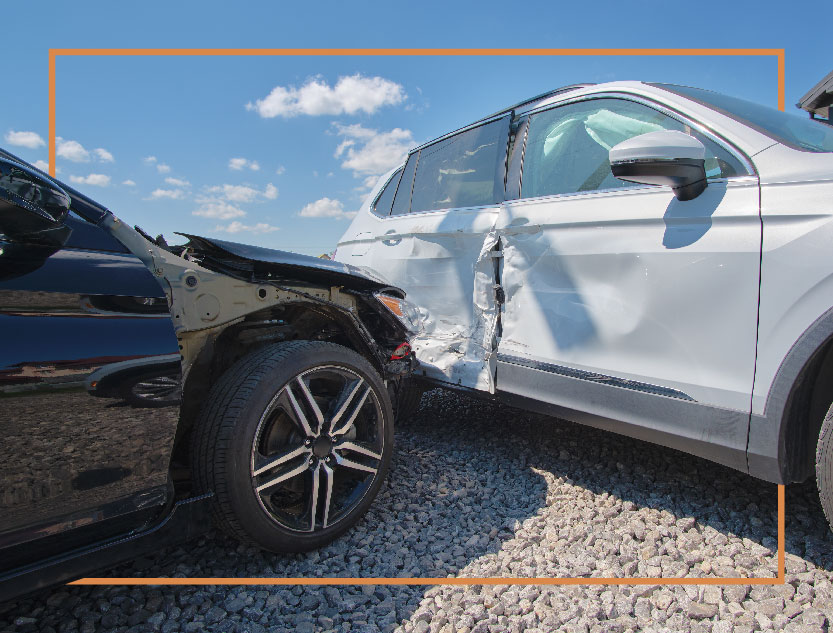
Car accidents are the most common scenario for UM/UIM claims. Despite laws requiring minimum insurance coverage, approximately 14% of U.S. drivers — roughly 1 in 7 — carry no liability insurance, according to the Insurance Research Council (IRC). When one of these drivers causes an accident, the injured victim must rely on their own UM coverage to recover compensation.
Motorcycle Accidents
Motorcycle accidents caused by uninsured drivers are particularly devastating because motorcyclists are more vulnerable to serious injury. UM/UIM coverage on your motorcycle policy can be a critical lifeline when the at-fault driver has no insurance.
Hit-and-Run Accidents
When a driver causes an accident and flees the scene, the victim is left with no one to file a claim against. UM coverage typically covers hit-and-run accidents, treating the unidentified driver as an uninsured motorist. However, some policies require that there be physical contact between the vehicles, while others do not. The specific terms of your policy matter.
Pedestrian and Bicycle Accidents
Pedestrians and bicyclists who are struck by uninsured drivers may also be covered under their own auto insurance UM/UIM policy, even though they were not driving at the time. In many states, UM/UIM coverage follows the policyholder, not the vehicle.
Accidents Involving Stolen Vehicles
When the at-fault vehicle was stolen, the vehicle owner’s insurance may deny coverage because the driver was not an authorized user. In this situation, the victim’s UM coverage may be the only available source of compensation.
How Do Uninsured Motorist Claims Work?
Step 1: File a Claim With Your Own Insurance Company
After an accident with an uninsured or underinsured driver, you file a UM/UIM claim with your own auto insurance company. You will need to provide documentation of the accident, the other driver’s lack of insurance or insufficient coverage, and your injuries and damages.
Step 2: Investigation
Your insurance company will investigate the claim, which may include reviewing the police report, obtaining your medical records, taking a recorded statement from you, and having your vehicle inspected. Your attorney can guide you through this process and ensure your rights are protected.
Step 3: Negotiation
Your attorney will prepare a comprehensive demand documenting all of your damages and negotiate with your insurance company for a fair settlement. This process is similar to negotiating with a third-party insurer, except you are dealing with your own company.
Step 4: Arbitration or Litigation
If your insurance company refuses to offer fair compensation, the next step depends on your policy. Many UM/UIM policies require disputes to be resolved through binding arbitration rather than a lawsuit. In arbitration, a neutral arbitrator (or panel of arbitrators) hears both sides and makes a decision. If your policy does not require arbitration, your attorney may file a lawsuit against your own insurance company to recover the compensation you are owed.
What Is Stacking of UM/UIM Coverage?
“Stacking” refers to the ability to combine UM/UIM coverage limits from multiple vehicles on the same policy, or from multiple policies, to increase the total amount of coverage available. For example, if you have two vehicles on your policy, each with $100,000 in UM coverage, stacking would give you $200,000 in total coverage.
Whether stacking is allowed depends on your state’s laws and the terms of your insurance policy. Some states allow stacking by default. Others allow insurance companies to include anti-stacking provisions in their policies. And some states prohibit stacking entirely. An experienced attorney can review your policies and advise you on whether stacking is available to increase your potential recovery.
What Compensation Is Available in Uninsured Motorist Claims?
UM/UIM coverage provides compensation for the same types of damages you would recover from the at-fault driver’s insurance, up to your policy limits:
Economic Damages
- Medical expenses — Emergency care, hospitalization, surgery, rehabilitation, physical therapy, prescription medications, and future medical treatment
- Lost wages — Income lost while you were unable to work
- Loss of earning capacity — If your injuries permanently reduce your ability to earn a living
- Property damage — Some UM/UIM policies include property damage coverage, though this varies. Separate uninsured motorist property damage (UMPD) coverage may be available
Non-Economic Damages
- Pain and suffering — Physical pain from your injuries
- Emotional distress — Anxiety, depression, PTSD, and other psychological impacts
- Loss of enjoyment of life — Inability to participate in activities you enjoyed before the accident
- Loss of consortium — Impact on your relationship with your spouse
What If the At-Fault Driver Has Some Insurance, But Not Enough?
When the at-fault driver is underinsured, the claims process typically involves two stages:
- Collect the at-fault driver’s policy limits — Your attorney will first pursue a claim against the at-fault driver’s insurance to collect the maximum amount available under their policy
- File a UIM claim — After collecting from the at-fault driver’s insurance, your attorney will file a claim under your UIM coverage for the remaining damages. In most states, the amount you already collected from the at-fault driver is credited against your UIM recovery
Important: Before accepting a settlement from the at-fault driver’s insurance, you should notify your own insurance company. Many UIM policies require you to get your insurer’s consent before settling with the at-fault driver. Settling without consent could jeopardize your UIM claim.
What Other Sources of Compensation Are Available?
Depending on the circumstances of your accident, additional sources of compensation may be available beyond UM/UIM coverage:
- Medical Payments (MedPay) coverage — This coverage on your own policy pays for medical expenses regardless of fault, up to the policy limit
- Personal Injury Protection (PIP) — In no-fault states (including Florida, Michigan, New York, and others operating under state-specific no-fault statutes), PIP coverage pays for medical expenses and a portion of lost wages regardless of who caused the accident
- Third-party claims — If someone other than the uninsured driver contributed to the accident (such as a vehicle manufacturer, government entity responsible for road maintenance, or a bar that overserved the driver under dram shop liability statutes), you may have a separate claim against that party
- Lawsuit against the uninsured driver — You can file a personal injury lawsuit directly against the uninsured driver under standard negligence law. However, collecting a judgment from someone without insurance can be difficult if they lack significant assets
Frequently Asked Questions
Will my rates go up if I file a UM/UIM claim?
UM/UIM claims are filed because another driver caused the accident. In many states, insurance companies are prohibited from raising your rates based on a UM/UIM claim because the accident was not your fault. However, the rules vary by state, and some insurers may still consider the claim in future rate calculations. Your attorney can advise you on your state’s specific protections.
What if I do not have UM/UIM coverage?
If you do not have UM/UIM coverage and the at-fault driver is uninsured, your options are more limited. You may be able to recover through MedPay or PIP coverage on your own policy, file a lawsuit directly against the uninsured driver, or pursue claims against other responsible parties. Consulting an attorney is especially important in this situation to identify all potential sources of recovery.
Does UM/UIM coverage apply to hit-and-run accidents?
In most states and under most policies, yes. UM coverage typically treats a hit-and-run driver as an uninsured motorist. However, some policies require physical contact between the vehicles for hit-and-run coverage to apply, and some states have specific requirements such as filing a police report within a certain timeframe. Review your policy or consult an attorney to understand your coverage.
How much UM/UIM coverage should I carry?
As a general rule, you should carry UM/UIM coverage limits that match your liability coverage limits. If you have $100,000/$300,000 in liability coverage, carry the same in UM/UIM. Given the number of uninsured drivers on the road, higher UM/UIM limits provide better protection. The additional cost is typically modest compared to the protection it provides.
How long does a UM/UIM claim take?
The timeline varies. Some UM/UIM claims settle within a few months, while others take a year or longer, especially if the claim goes to arbitration. Your attorney will work to resolve the claim as efficiently as possible while ensuring you receive fair compensation.
Can my insurance company deny my UM/UIM claim?
Your insurance company can dispute or deny your UM/UIM claim, but that does not mean the denial is valid. Common reasons for denial include disputing liability, arguing the injuries are pre-existing, or claiming the policy does not cover the situation. An attorney can review the denial, evaluate its legitimacy, and challenge it through negotiation, arbitration, or litigation.
Do I need a lawyer for a UM/UIM claim?
While you are not required to have a lawyer, UM/UIM claims can be surprisingly adversarial because your own insurance company has a financial interest in paying as little as possible. An experienced attorney can ensure your rights under the policy are protected and fight for the full value of your claim.
Find a Uninsured Motorist Lawyer in Your State
Maxx Compensation represents uninsured motorist victims across all 50 states. Select your state to learn about the laws and legal options specific to your location:
- Alabama
- Alaska
- Arizona
- Arkansas
- California
- Colorado
- Connecticut
- Delaware
- Florida
- Georgia
- Hawaii
- Idaho
- Illinois
- Indiana
- Iowa
- Kansas
- Kentucky
- Louisiana
- Maine
- Maryland
- Massachusetts
- Michigan
- Minnesota
- Mississippi
- Missouri
- Montana
- Nebraska
- Nevada
- New Hampshire
- New Jersey
- New Mexico
- New York
- North Carolina
- North Dakota
- Ohio
- Oklahoma
- Oregon
- Pennsylvania
- Rhode Island
- South Carolina
- South Dakota
- Tennessee
- Texas
- Utah
- Vermont
- Virginia
- Washington
- West Virginia
- Wisconsin
- Wyoming
Contact Maxx Compensation Today
If you have been injured by an uninsured or underinsured driver, do not assume you have no options. The experienced legal team at Maxx Compensation, led by attorney Charles C. Teale, will review your insurance policies, identify every source of available compensation, and fight to recover the maximum amount for your injuries.
Call 877-462-9952 today or visit our free case evaluation page for a free, confidential consultation. There is no fee unless we recover compensation for you.